

Abu Al Walid Muhammad ibn Rushd, better known in the West as Averroes, certainly embodies the synthesis of the Islamic tradition and philosophical contemplation.
He was born in Cordoba in 1126. He arrived at a time when the Islamic world was deeply entrenched within the intellectual inheritance of Greece. He became a great commentator on the work of Aristotle, while also an Islamic judge, physician and jurist.
Personally, I find his life and work fascinating. He made great contributions to the philosophical tradition which we have all inherited. However, in my own humble opinion, he misunderstood the very purpose of philosophy.
Ibn Rushd, seemed to be so enamoured by Aristotle, that he attempted to re-interpret the Islamic tradition to fall into line with philosophy.
This is where the controversy that surrounds him was born.
Nonetheless, he is a thinker who is very much worth studying. We can learn from his work and also his mistakes.
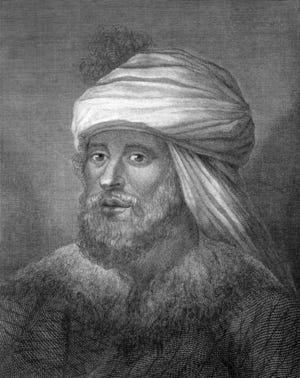
Ibn Rushd’s Study of Aristotle
Ibn Rushd’s family were known as being distinguished Islamic judges. His grandfather and father in particular. He eventually followed suit, becoming a ‘qadi’.
Therefore, he was not an intellectual, academic only. He was an active judge within an Islamic environment. He studied Islamic law, belief, medicine and of course philosophy. However, the context in which he studied was thoroughly Muslim.
He spent his days serving the community. Yet, at night he devoted himself to the work of Aristotle.
Ibn Rushd received patronage from the Almohad ruler Abu Yaqub Yusuf, who encouraged him to develop him philosophical understanding. It was Ibn Tufayl who introduced him, as the ruler was intent on gaining a thorough understanding of Aristotle’s most difficult work. Ibn Rushd then began an enormous project of explaining Aristotle to his contemporaries.
He would go onto write commentaries on nearly the entire Aristotelian corpus. From this, he would gain an incredible influence. Interestingly, later Christian scholars would refer to him as ‘the Commentator’. His works would go onto become important within the Jewish and Christian intellectual traditions.
This is a very ‘European’, story. In Cordoba a Muslim became one of the main custodians of the western philosophical tradition.
Reason vs Revelation
Ibn Rushd was troubled with what he had learned. He would often wonder, is philosophy compatible with Islam?
After much deliberation, he came to the understanding that it most definitely is.
He wrote on this subject. In The Decisive Treatise, he argued that philosophy should have a legitimate place within the Islamic tradition. The reasoning he used to elucidate this claim was incredibly straightforward.
Within the Qur’an we can see that Allah repeatedly calls us to reflect. We have been bestowed with reasoning faculties and we are commanded to contemplate the created world. Therefore, rational investigation cannot be opposed to revelation.
If demonstrative reasoning is certain, it will not contradict revelation.
He famously said:
“Truth does not oppose truth, but rather agrees with and bears witness to it”
This is an incredible contribution to the pursuit of knowledge. We Muslims should not be scared of the truth. If Plato arrived at a truth, a pagan hellene, we can still work with it. Truth belongs to God.
This particular way of viewing knowledge is prevalent within the Islamic tradition. We are encouraged to take wisdom wherever it can be found. Muslims have translated philosophy from Greece, literature from Persia and mathematics from India, not because these civilisations were Muslim, but because certain truths can be recognised when we use our reasoning faculties.
Ibn Rushd & Islam
It would be disingenuous to label Ibn Rushd as a philosopher first and foremost. He never advocated for philosophy to replace Islam. To the contrary, he believed Islamic law was objectively true and philosophy was a means to understand it.
See, he arrived at the conclusion that human beings possess different intellectual capacities. Some people respond to rhetoric and iconography. Others need to pursue dialectical argumentation. Though, a smaller group are capable of demonstrative philosophical reasoning.
He invented an intellectual hierarchy.
It is without doubt that the Qur’an is for the whole community. However, the philosopher is capable of investigating the more esoteric, deeper meanings present within it. This led him to permitting allegorical interpretation when reason conflicted with the apparent literal understanding of particular verses.
This is when controversy enters the conversation.
The literal reading of revelation was not the end. One may philosophise and interpret scriptural language accordingly.
It was this methodology that allowed Ibn Rushd to preserve harmony between revelation and the philosophy of his day.
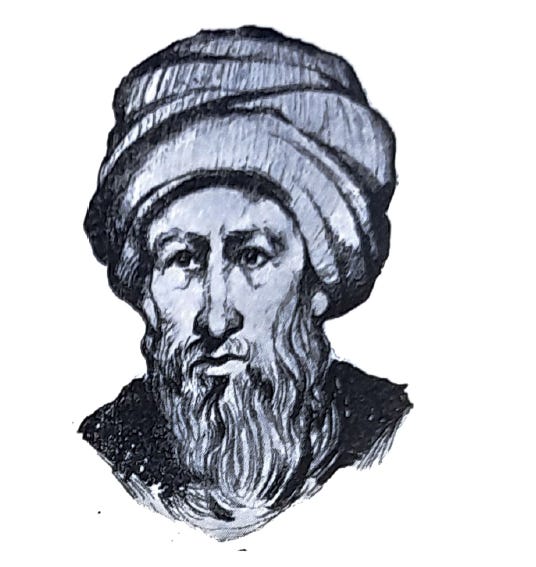
Aristotle’s Infinite Universe
The most controversial example of Ibn Rushd attempting to re-interpret revelation concerns the nature of the universe.
Muslims throughout history have generally believed that creation had a beginning. In contrast, Aristotle believed that the cosmos was eternal.
Interestingly, Ibn Rushd followed Aristotle. He went on to argue that the universe was eternal but God was its ultimate cause.
This was undoubtedly a very conflicting issue. Ibn Rushd would attempt to argue that this did not contradict divine causation but this raises a unavoidable question.
How far can we go in re-interpreting revelation?
This was the exact problem that resulted in the conflict between Ibn Sina and Al Ghazali. Ibn Rushd responded to Al Ghazali with his own work The Incoherence of the Incoherence, defending Aristotelian philosophy.
It is important to note, that this agreement was not between revelation and reason. It was a disagreement between Muslims about how revelation and philosophy relate to each other.
The Problem of Resurrection
The divergence of Ibn Rushd’s thought from mainstream Islamic understanding becomes even more evident when we discuss resurrection.
Bodily resurrection is not a teaching upon the peripheries of Islam, but central to the Qur’anic worldview.
Human beings will die, they will be resurrected, stand before God and judged accordingly.
Aristotle’s philosophy was not compatible with this understanding.
Ibn Rushd now had dilemma. He could abandon Aristotelian philosophy that conflicted with revelation or reinterpret Islamic teachings philosophically.
He went on to address this issue in an incredibly complex fashion. He did not simply accept bodily resurrection in a straightforward theological sense. He attempted to reconcile both teachings. This position attracted substantial criticism.
We do not need to accept all of his conclusions. Nonetheless, I do feel we need to have an understanding of them.
This was a really interesting time in history. I feel there are also parallels to nowadays.
The advancement of science has left many Muslims wondering how they can accept certain scientific advancements while also understanding revelation in the manner of classical scholars.
Some, like Ibn Rushd will rush to bend the teachings of Islam to cater for scientific understandings. However, others will look at philosophy and science as something that undergoes change. Therefore, it is not necessary to reinterpret every verse to fall in line with a modern understanding of reality.
This is the position that I uphold.
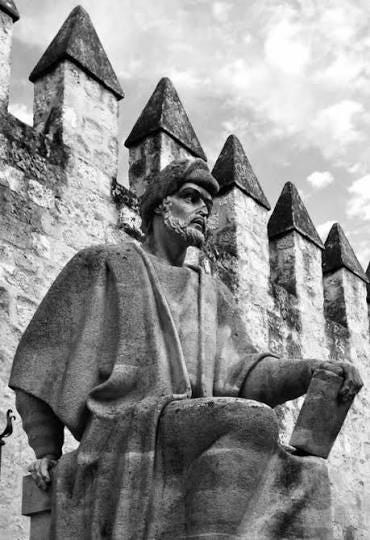
Our Inheritance
In my opinion Ibn Rushd’s greatest contribution was showing us all that the western tradition is not something we as Muslims should stand outside of. Greek philosophy, Roman legal systems, Christian thought and medieval universities are all part of our inheritance.
Islam truly is a filter. We can look back at everything that has come before and accept it’s truth and reject the mistakes. This is how a living civilisation evolves.
Ibn Rushd’s Legacy
In 1195 AD, Ibn Rushd was subjected to a period of exile and disgrace. He had works banned, and fell from political favour. Shortly before his death he returned to Cordoba.
However, his legacy was only beginning. European thinkers would engage with his thought and his works would be taught throughout the West’s universities. He was known as an expert on Aristotle.
This is interesting. A Muslim from Cordoba helped us, in Europe, rediscover Aristotle.
He showed us that a Muslim can engage with our philosophical inheritance. However, engagement does not need to be surrender.
We do not need to choose between Europe and Islam.
Europe has been moving toward Islam for centuries. Through our thought and the fall of Christianity.
We cannot look backwards and romanticise a Christian revival. This ship has sailed.
With peace,
Gavin John محمد جبريل